
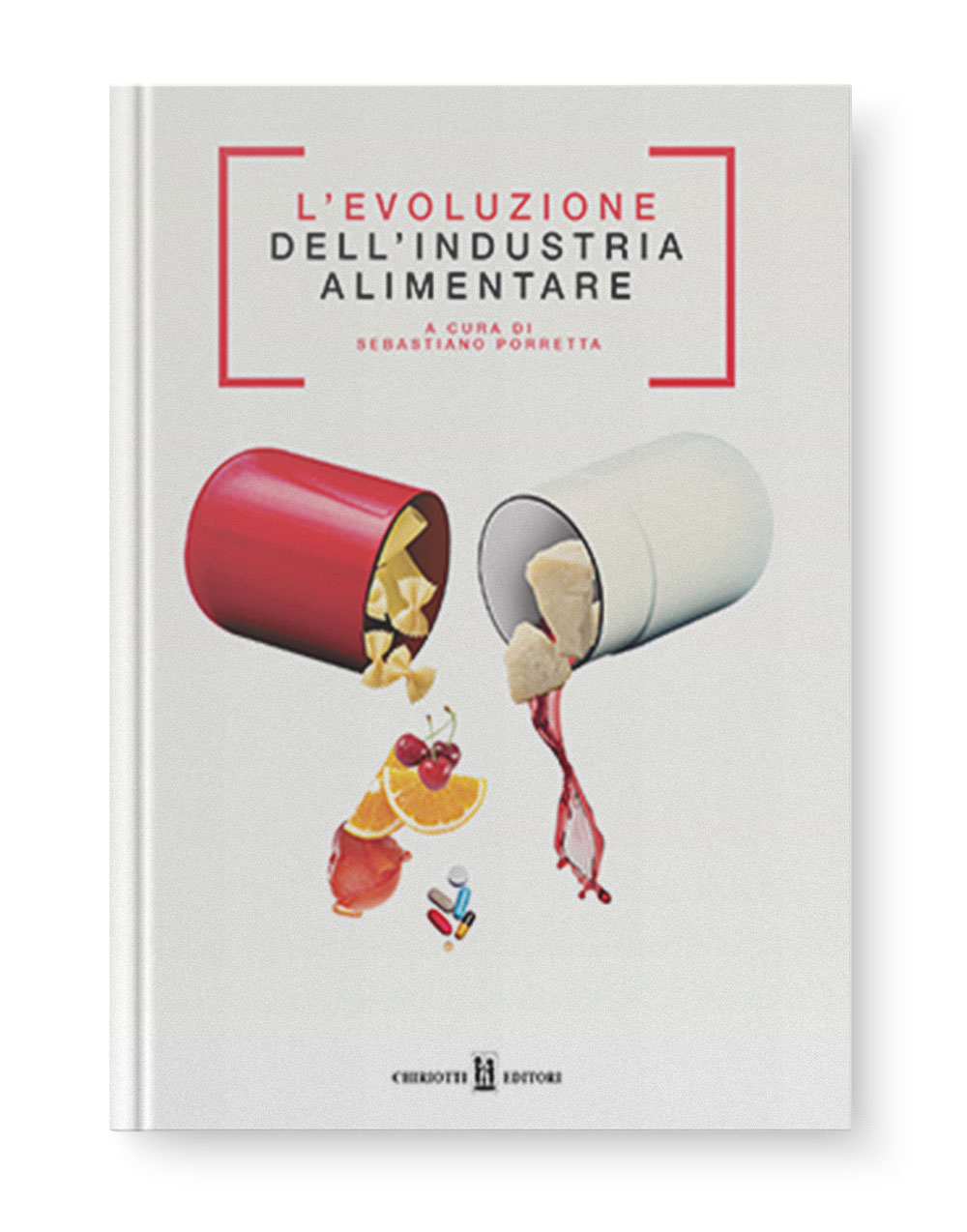


The Italian food industry: the origin, evolution and reasons for a global success
Arising from the need to remove fresh raw materials from their natural and rapid decay to allow their use no longer tied to seasonality and the location of production, the food industry has taken a decisive role in the new social order of the most advanced countries and in the battle against hunger that afflicts humanity. Stimulated by the evolution of consumer needs, determined by socio-economic and psychological factors, industrial activity has long since abandoned the character of a craft enterprise, tenaciously tied to old work patterns, to take on that of a large enterprise under the banner of maximum efficiency, mechanization, automation, hygiene and the continuous renewal of techniques and processing plants.
And today, strong in the technological and scientific development, in addition to the commitment to conserve easily perishable foods, is able to fulfill the task of satisfying current nutritional needs, as they are expressed in the family and collective context (ready-made and pre-cooked meals), but also more specific ones through the preparation of products for children, for the elderly, for athletes or for those on particular dietary regimes (allergies, intolerances, veganism or for religious reasons).
In addition to this, consumers increasingly tend to choose those products considered "suitable" for the type of diet to be followed and which are more in keeping with their physical characteristics, and hence the birth of "functional" foods, or those aimed at exercising a therapeutic action.
To satisfy an increasingly varied and demanding demand for food, the food industry has resorted to tools drawn from other technological fields such as biotechnology and genomics, used to develop products such as energy drinks and bars, light or enriched (fortified) products and supplements.
Another significant phenomenon is the emergence of a more aware consumer who is more attentive to the quality of food, both due to a general increase in the level of education and due to a series of scandals that have drawn attention to food risks and the different forms of information and food labeling. Important, in this regard, is the significant regulatory activity that has established itself in recent years both at European and national level.
The text, written in colloquial form by opinion leaders in the sector of expertise and edited in a particularly elegant edition by Sebastiano Porretta - probably the most prolific author of reference in the sector - deals with the topics with the necessary scientific rigor, but also with a historical and prospective approach, and is aimed at scholars, technicians and operators, but, more generally, at all those curious who intend to know and study in depth the origin and evolution of a highly strategic sector for the Italian economy and a strong driving force of Made in Italy in the world.
The first chapter, written by Rita Acquistucci and Francesca Melini, is dedicated to production, technology, nutrition and image of the pasta, a timeless product, while the second, by Renato Pieri and Bruno Battistotti, illustrates the evolution in the sector dairy. Two chapters follow on the process of winemaking (by Vincenzo Gerbi, Luca Rolle, Simone Giacosa, Alberto Caudana) and the culture of innovation in wine sector (Attilio Scienza); then, an in-depth analysis by Sebastiano Porretta on the tomato and its evolution in canning sector; the point on the evolution of the animal preserves (Cattaneo and Cantoni); the processes, which represent the most significant evolutions in food technologies (Luigi Palmieri).
The author
Sebastian Porretta He is a senior researcher at the Ministry of Economic Development at the Experimental Station for the Food Preservation Industry (SSICA) in Parma, where he heads the Department of Consumer Science. He is the author of numerous articles published in international journals and books, including "Sensory Analysis & Consumer Science," "Elements and Concepts in Food Development," "Concept Research in Food Product Design and Development," "Food Shelf Life," "Innovating with Consumer Science," and "Sensory Marketing." Qualified as a full professor, he teaches at the Catholic University of the Sacred Heart; he is President of the Italian Association of Food Technology (AITA).

The eighth chapter, by Pamela Manzi and Alessandra Durazzo, is a long journey the power supply and food pyramids, while the ninth, edited by Rossella Contato, focuses on packaging, and the tenth, by Valeria Bucchetti, illustrates how the packaging transforms food.
Next we talk about functionality, understood as a new link in the evolutionary scale of food (Lorenzo Morelli) and of the evolution expressed in Hygienic and microbiological control in the food industry (Giuseppe Comi), in the presence and control of pests in the food industry (Marco Pagani) and in the disinfection in the food industry: from early experiences to current solutions (Mario Stanga).
Sebastiano Porretta is also the author of a chapter on the path from organoleptic tests to Sensory Marketing, and, together with Helena Maria Andrea Bolini and Howard R. Moskowitz, to a contribution that traces a brief history of research on consumer of food products, from product to message towards the genomics of the mind.
The last three chapters are dedicated to: eco-innovation in the food industry (Alessandra Zamagni and Paolo Masoni); the European evolution of food risk (Gaetano Liuzzo); the evolution of the food law: consumer information (Afro Ambanelli), to conclude with the research and development prospects for the Italian food industry (Mauro Moresi).
Click HERE to download the index in PDF


